When you start building your microphone collection—especially if you are in the audio world simply as an enthusiast—you've probably spent a lot of time reading forum threads about which microphone is "the best" for each situation. You will have noticed that opinions vary widely. Everyone, although we sometimes agree, has their favorite microphones. And I'm not just talking about microphone types, but specific models with brand and surname. Those preferences come from experience: trying many microphones in many different applications. The problem is that most people who don't work professionally in this field don't have that opportunity, and they feel lost when it comes to deciding which microphone to buy for a specific need.
Anyone truly interested in understanding microphones in depth has an endless number of excellent books available. The purpose of this article, though, is to offer a light, practical text without too much theory: something that, simply by understanding certain characteristics of a microphone, allows you to know what you can use it for—even if you don't yet know all the popular models on the market.
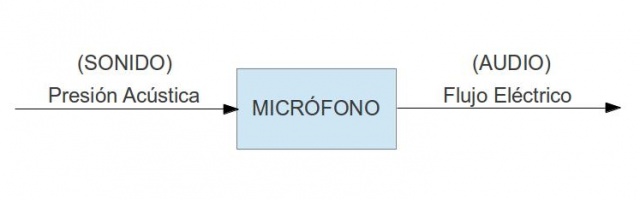
Before diving into different aspects of microphones, I want you to be clear about one idea: at the end of the day, a microphone is just a device that transforms sound into audio, that is, it converts variations in sound pressure into an electrical signal. The way that conversion happens is what determines whether a microphone is suitable for a particular application or not.
Types of microphones
The most decisive aspect of a microphone is the method it uses to convert acoustic pressure into electricity. Although each specific model and brand has its own specifications, microphones using the same conversion principle share a set of common characteristics. In this article, we'll only look at the methods used in microphones typically found in recording studios. Since this is not meant to be an engineering-level text, but a practical one, I'll divide the microphone types in the way I have always understood them.
Magnetic (electrodynamic) microphones
These microphones are based on electromagnetic induction, meaning the appearance of a potential difference (voltage) in a conductor exposed to a changing magnetic field. Let's look at this in an intuitive way.
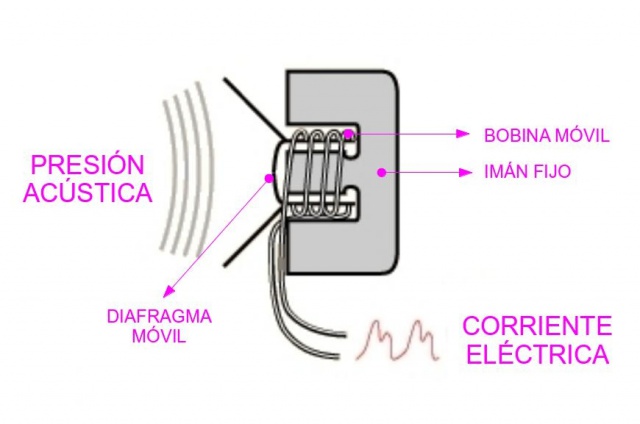
Basic diagram of a dynamic microphone
In this image we see the basic structure of a dynamic microphone, which is based on electromagnetic induction. The way it works is simple: variations in sound pressure move the diaphragm, to which a coil is attached. This coil is located within the magnetic field generated by permanent magnets. As the diaphragm moves, the coil moves within that field and "experiences" variations in magnetic flux, thereby generating a voltage at its terminals. In other words, an electric current is created. The greater the sound pressure pushing the diaphragm, the more current is generated.
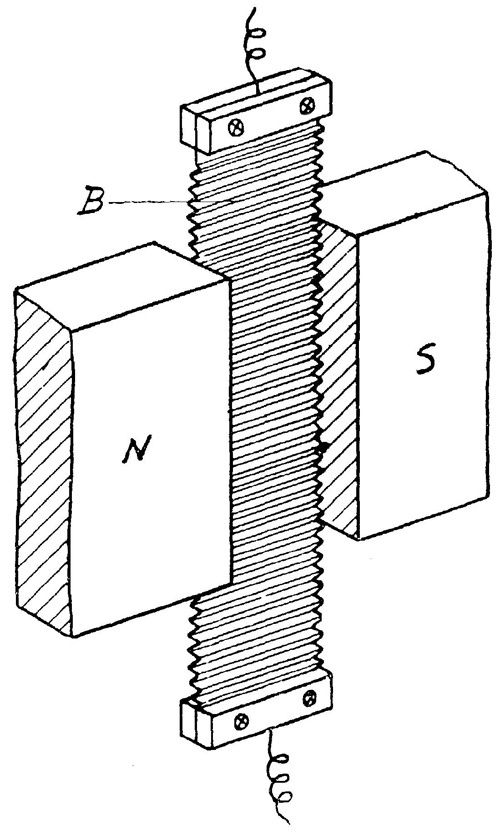
Basic diagram of a ribbon microphone (image: Wikipedia)
The other type of microphone based on electromagnetic induction is the ribbon microphone. Its operating principle is basically the same as the dynamic microphone, but instead of a diaphragm plus coil, it uses a single element: a very thin, wide aluminum ribbon. Variations in acoustic pressure set the ribbon in motion within the magnetic field, again generating a corresponding variation in electrical potential.
In this video you can see a comparison of two materials used for the ribbons in this type of mic:
Ribbon material comparison by Michael Joly from OktavaMod
A key characteristic of these "magnetic field" microphones is that their moving parts are relatively heavy—especially in dynamics compared to ribbons. At high frequencies, where mechanical movement must be faster, this mass becomes a limitation. As a result, these microphones generally do not perform as well in the high-frequency range. The typical high-frequency roll-off in a dynamic microphone tends to start around 10 kHz. Since ribbon microphones use a lighter element than dynamics, their high-frequency roll-off usually begins later, around 14 kHz, so ribbons tend to offer a better high-frequency response than dynamics.
Also, due to the mass of their moving parts, dynamic microphones often show a presence peak somewhere between 2 and 8 kHz.
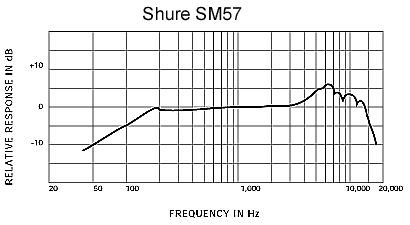
Frequency response of the Shure SM57 (dynamic microphone)
Here we can see the frequency response of a Shure SM57, clearly showing the high-frequency roll-off and a prominent peak around 4–6 kHz.
Beyond these tonal characteristics, we must also consider the physical robustness of these microphones. Dynamic mics can withstand all kinds of abuse (you have to be really brutal to break one), whereas ribbon mics are much more delicate. The ribbon is a fragile element and can be damaged easily, either by rough handling or by placing it too close to a very loud sound source. When you buy a ribbon mic, make sure you know the maximum sound pressure level it can withstand (we'll talk about that specification later).
Also, keep in mind that ribbon microphones typically have a very low output level, so you'll need to turn the mic preamp up quite high. If the preamp you plan to use doesn't have enough clean gain, you&aposll probably need to consider a different preamp, no matter how much you like that particular one.
Capacitor (condenser) microphones
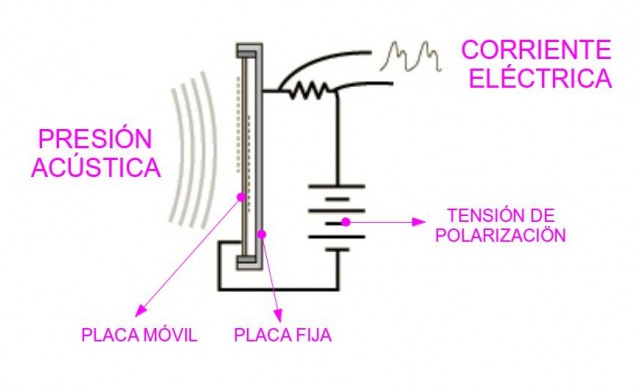
Basic diagram of a condenser microphone
These microphones work based on changes in the capacitance of a capacitor formed by a fixed plate and a movable plate. The movable plate acts as the diaphragm: it moves according to the acoustic pressure applied. Because the distance between the fixed and movable plates changes, the capacitance also changes, and this produces a voltage variation proportional to the sound pressure applied to the diaphragm.
For this type of microphone to work, the plates must have an initial polarization voltage between them. Depending on how that polarization is achieved, we can distinguish two types of mics. On one hand we have true condenser microphones (like the one in the diagram), which use an external power source to provide that polarization. On the other hand, we have electret microphones, which use special materials so that the plates are permanently polarized and therefore do not require an external polarization supply.
We also need to keep in mind that the capsule of these microphones delivers a very low-level signal, so they require an amplifier stage. Because that signal is so weak and would be easily degraded by long cable runs, the amplifier circuit is placed inside the microphone body itself. That amplifier may be tube-based or use FET transistors. Electret microphones are almost always FET-based and, as we mentioned, do not require an external polarization voltage. Condenser microphones may use either tube or FET amplifiers. When we use FET-based condensers, the necessary polarization voltage is usually supplied from the mic preamp or console to which the mic is connected (normally +48 V DC, known as phantom power). Tube condenser mics, however, are a bit special: the size of the tubes makes their bodies relatively large, and the tubes require their own dedicated power supply. That external power supply also provides the polarization voltage for the capsule, so they do not need external phantom power.
We'll go deeper into other characteristics of these microphones later on, but for now we can say that, since their moving parts are much lighter than those in "magnetic field" mics, mechanical mass is far less of a limitation at high frequencies, which means their frequency response is generally much flatter than that of dynamic and ribbon microphones.
Microphone specifications
Polar patterns
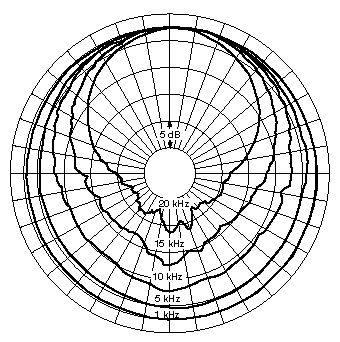
A microphone's polar pattern is a graphical representation of its directional response—that is, how the mic responds to sound depending on the angle of incidence. Note that a microphone's directional response is not the same at all frequencies. At low frequencies, the pickup pattern is usually broader, becoming narrower as frequency increases.
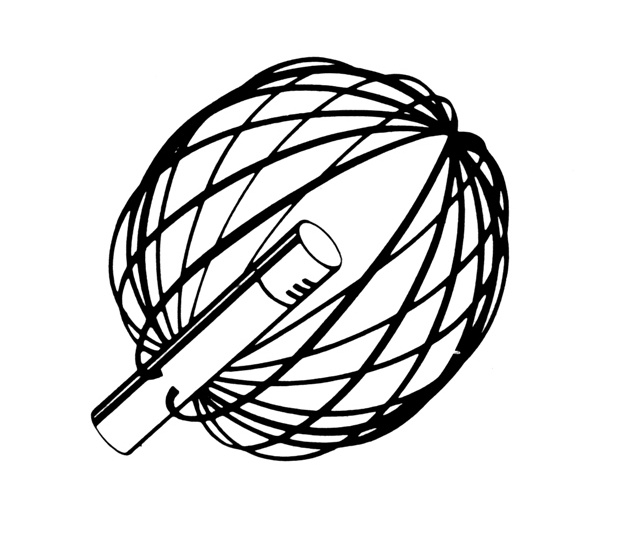
Also keep in mind that polar patterns are a two-dimensional representation of a phenomenon that actually occurs in three dimensions. This is important because people sometimes struggle to translate these diagrams into real-world mic placement decisions.
There are three fundamental types of polar patterns: directional, omnidirectional, and bidirectional.
Omnidirectional microphones do not discriminate based on the direction of incoming sound; they capture sound equally from all directions. When we use mics with this type of polar pattern, we cannot separate sources based on their location, so the recording will include both the target source and any other sounds occurring simultaneously. We must also remember that these microphones will pick up a considerable amount of the room's ambient sound.
Bidirectional (figure-of-eight)
Bidirectional microphones (figure-of-eight) pick up sounds equally from the front and rear while rejecting sounds coming from the sides. The figure-of-eight pattern is typical of ribbon microphones because of the way the ribbon is mounted, although there are also ways to build directional ribbons. For example, we can use this type of mic when we want to capture two opposing sound sources in the same take, or when we want to employ stereo mic techniques based on bidirectional mics (such as the Blumlein technique).
Cardioid
Supercardioid
Directional microphones primarily pick up sound from the front and attenuate sound coming from the rear. Depending on how narrow the frontal lobe of the pattern is, we speak of cardioid or supercardioid microphones. Supercardioids have a narrower front lobe but are also more sensitive to sounds coming directly from the rear. These microphones are practically essential when we need to isolate a source in a noisy environment or when it is surrounded by other simultaneous sources (for example, close-miking individual drum kit elements, or reinforcing a specific section in an orchestral recording).
Sensitivity
The sensitivity of a microphone refers to the output level we get for a given sound pressure level at the capsule. A low-sensitivity mic will deliver a lower output level than a high-sensitivity one when both are exposed to the same SPL. Generally speaking, the microphones with the highest sensitivity are condensers, because, as we have seen, they have an internal amplifier stage in the body. Ribbon mics, meanwhile, tend to be among the least sensitive.
Don't assume that sensitivity is directly related to audio quality; it only determines how much gain we need from the mic preamp. Keep in mind that as we raise the preamp gain, the noise level also increases, which means sensitivity becomes very important when choosing a microphone for a given application. No matter how much we like a certain mic, in practice we may not be able to use it appropriately on some sources. For example, a very low-sensitivity ribbon microphone will be practically unusable for recording a chamber music piece: in the soft passages (marked "piano"), where the levels are very low, we would be forced to crank the preamp so much that the resulting noise would ruin the recording. Of course, there are very quiet preamps with plenty of gain on the market, but that's a topic for another article.
I won't go into how microphone sensitivity is measured scientifically; if you want to dig deeper, you'll find excellent resources online. What you should keep in mind is that large differences in sensitivity between microphones are mainly due to the microphone type (ribbon, condenser, dynamic, etc.).
Self-noise
The only microphones that really exhibit self-noise are capacitive types (electret and condenser). This is because of their internal amplifier circuit, which, like all electronics, generates noise. Tube microphones tend to be noisier than FET-based models. Magnetic microphones (dynamic and ribbon) do not have significant self-noise.
Again, since this is not meant to be a scientific article, we won't go into formulas. As a rule of thumb, you can consider anything below 30 dB SPL of self-noise acceptable, and anything below 20 dB SPL excellent.
Maximum sound pressure level (SPL)
This is the maximum sound pressure level a microphone can handle before it begins to distort—in other words, the highest SPL we can apply without distortion at the output. Typically, dynamic microphones can handle the highest SPLs, and ribbon mics the least. A maximum SPL rating above 135 dB SPL is good; above 150 dB SPL is excellent.
Remember that the closer we place the mic to a source, the higher the sound pressure level at the capsule will be. For example, in situations involving very loud sources and close miking, it's common to rely on dynamic mics (such as snare or tom microphones on a drum kit).
Frequency response
The frequency response (which we already mentioned when discussing microphone types) describes how the microphone's sensitivity changes with frequency. As a general rule, condenser microphones have the flattest and most extended frequency responses.
We shouldn't think of nonlinear frequency response as a "defect", but rather as something we can take advantage of. In fact, many engineers—myself included—believe that the best EQ is achieved at the recording stage, and you can imagine how much the choice of a microphone with a particular frequency response contributes to that.
If you remember the SM57 frequency response we saw earlier, it is far from flat. And yet, it is one of the most widely used microphones in professional audio. On snare drums, for example, it is a classic choice, partly because of that peak around 5 kHz, which coincides with the region where the snare attack lives. Another example: when I record very heavy metal bands where the instruments create a dense, harmonically rich wall of sound, I often use an SM57 for the vocals. I usually record the voice with two mics at once—an SM57 and a tube condenser—and then choose one or the other depending on the section of the song. The SM57's curve is excellent for keeping the lyrics intelligible even in very dense mixes. As you can see, certain frequency responses are naturally better suited than others for specific sources.